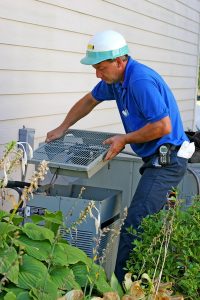
 It seems as though air conditioners are always breaking down at the worst possible times…what’s up with that?
Well, there’s a very logical explanation for it: Your air conditioner can take on a lot of damage and dirt over the months. Then, during the hottest time of the year—when the AC is being pushed to its limits—all that cumulative wear and tear will finally cause a serious problem to develop.
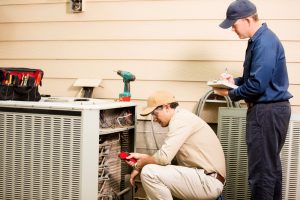
If you don’t want to become one of our air conditioning repair customers in Corona, CA this summer, we suggest having your AC checked before the season starts. All it takes is a quick maintenance check to prevent problems from things like:
 It’s true that winter is already over. And it’s also true that we live in the “always sunny” Southern California. But that doesn’t mean we aren’t subjected to cold nights that linger on through spring.
 Those with central air conditioning systems will inevitably ask themselves this question: How can I cool the rooms of my home at different temperatures?
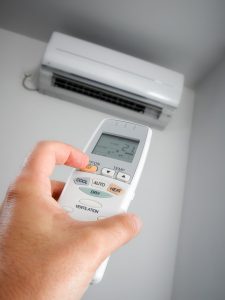 Having a heating system is nothing new, even for residents of Southern California. However, if we look at the statistics, the odds are high that you’ve been using a furnace up to this point. While furnaces have certainly earned their reputation and are great choices for heating, we’d argue that heat pumps are better in our climate. It’s not difficult for heat pumps to achieve the same level of comfort with greater efficiency.
 Nowadays, we are surrounded by “smart” technology. It’s rare to find someone without a smartphone; our televisions have their own app stores; there’s even a smart kettle, which is admittedly much more trouble than it’s worth. But the bottom line on all the smart stuff is this: you only need it if it makes sense for your needs.
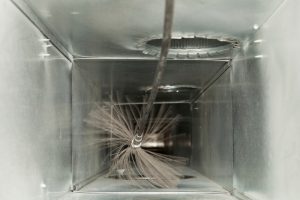 For many homeowners, the idea of “indoor air quality” might be new to them. It’s surprising to find out that your home’s indoor quality can be several times worse than the outdoors. But after learning that, what are you supposed to do now?
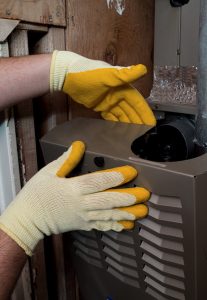
 In Southern California, there’s really no wrong time to have your heater serviced. If you lived in Vermont, sure, we would suggest having that done before the worst of winter takes hold. But with our weather, we can get away with having to service our furnace in the middle of the cold season.
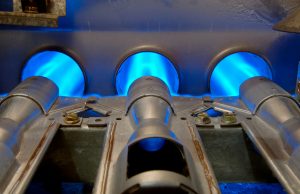 Depending on what kind of system we’re looking at, a heating system can last between ten and twenty years. Partway through that time, your eye might catch some new systems with better features, higher efficiency, or newer technology.