Finding water around your air conditioner can be alarming, but it doesn’t always mean something is wrong. Many homeowners searching for AC repair in Corona, CA are simply noticing their system doing exactly what it was designed to do. The key is understanding the difference between normal condensate drainage and a problem that needs professional attention. Knowing what to watch for can help you avoid unnecessary stress while protecting your home from water damage.
Why Does My Air Conditioner Produce Water?
As your air conditioner cools your home, it also removes moisture from the indoor air. That moisture condenses on the evaporator coil and drips into a drain pan before flowing through a condensate drain line. During hot, humid weather, your system may remove several gallons of water each day.
Because of this, it’s completely normal to see water dripping from the end of the condensate drain line outside your home. In fact, seeing a steady drip during periods of heavy air conditioner use is often a sign that your system is effectively controlling indoor humidity.
My Condensate Line Is Dripping Outside. Is My House Leaking?
The short answer is no. If the water is coming from the designated drain line outside, this is typically normal condensation leaving your HVAC system. The water should be clear, odorless, and drain away from your home’s foundation.
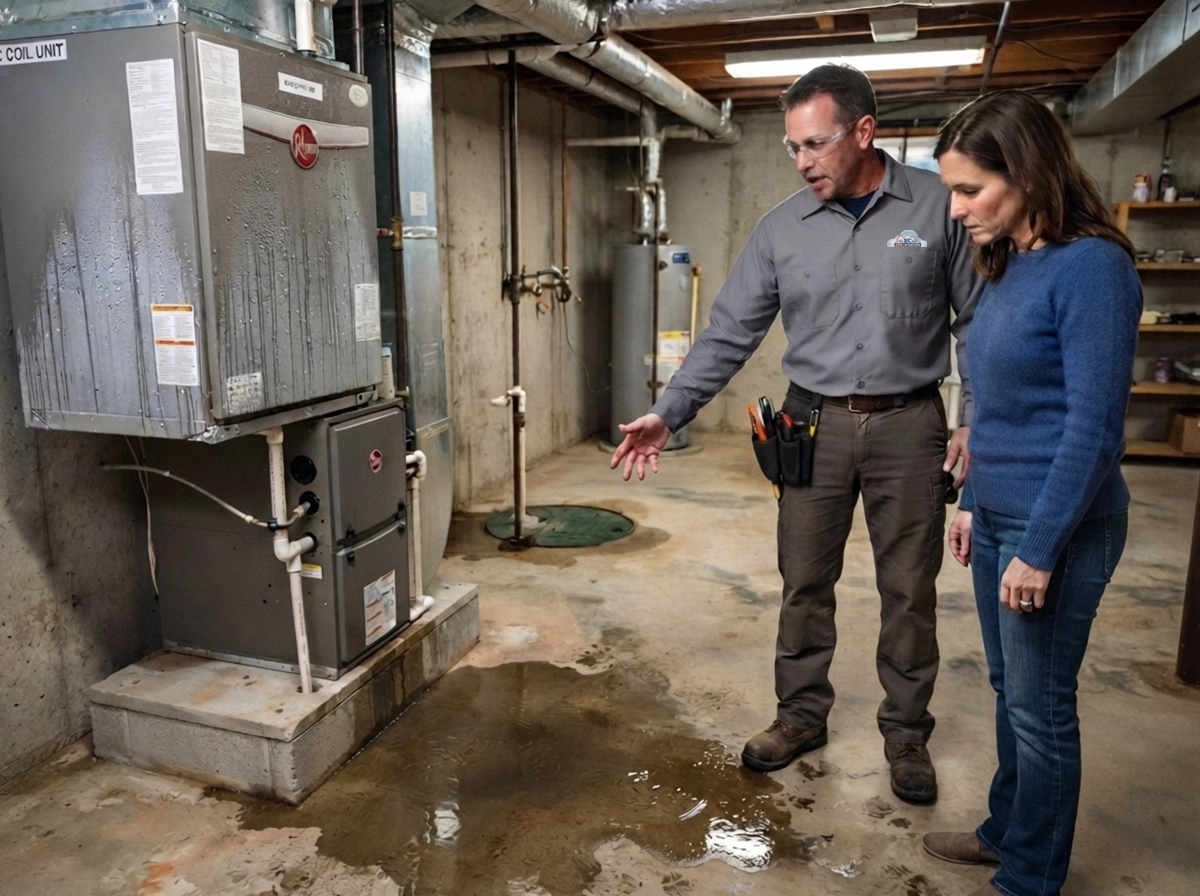
However, if you notice water collecting indoors near your furnace, air handler, or ceiling, that’s a different situation. Indoor leaks usually indicate that the condensate isn’t draining properly and requires immediate attention.
When Is Condensate a Problem?
A clogged condensate drain line is one of the most common causes of indoor AC leaks. Over time, algae, dirt, dust, and debris can build up inside the pipe, preventing water from draining normally. When that happens, the drain pan can overflow, leading to water damage, mold growth, and even system shutdown if your unit has a safety float switch.
Other warning signs include:
- Water pooling around the indoor unit
- Musty odors near the system
- Your air conditioner shutting off unexpectedly
- Visible rust or corrosion around the drain pan
- Higher indoor humidity than usual
These symptoms shouldn’t be ignored, as a small drainage issue can quickly become a costly repair.
How Can You Help Prevent Clogs?
Regular HVAC maintenance is the best way to keep your condensate system working properly. During a professional tune-up, the drain line can be inspected and cleared before blockages develop. Homeowners should also replace air filters regularly, especially during the cooling season, since cleaner airflow helps reduce debris that can contribute to drainage problems.
It’s also a good idea to periodically check that the outdoor drain line is flowing freely while your air conditioner is running.
Know When to Call the Experts
Normal condensate dripping outside is usually nothing to worry about. But if water is appearing inside your home, your system stops cooling properly, or you suspect the drain line is clogged, it’s time to have the issue professionally inspected.
Our experienced team can quickly identify the cause, clear blocked condensate lines, and make any necessary repairs to protect both your air conditioning system and your home. Addressing drainage problems early helps prevent bigger issues and keeps your AC operating efficiently throughout the cooling season.
Contact RKM Heating and Air Conditioning today to schedule an appointment with us for AC repair in Corona, CA. Done Right, Priced Right.